
Work That Matters
Raw Conservation’s Australasian Society of Zookeeping (ASZK) trip to Sumatra — what a trip!
We started at Orangutan Haven, on the outskirts of Medan. Built close to the city to raise awareness of orangutan conservation amongst locals, tourists, and policymakers, the Haven provides a permanent home for orangutans unable to return to the wild.
Many of the animals in their care have horrific histories — being shot and left blind or maimed, or poached for entertainment such as orangutan boxing. Despite incredibly limited resources, the team do an incredible job caring for these animals. It was an honour to spend time with them, learn from their experience and help maintain enclosures and introduce some new enrichment ideas.
Our accommodation was the neighbouring convent, which naturally led to karaoke one night. I never expected rapping nuns to make it onto my bucket list, but apparently Sumatra had other plans.
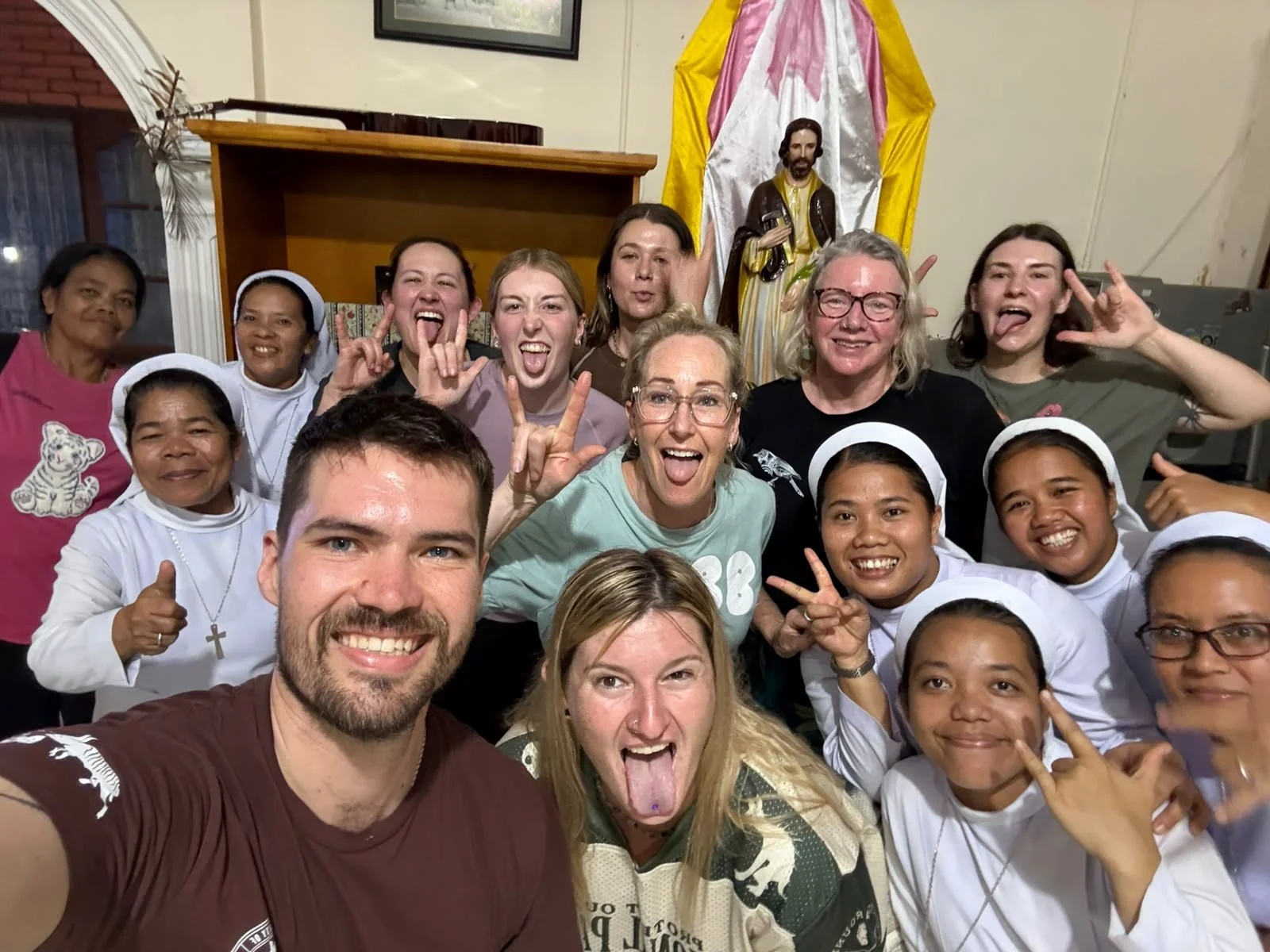
Our group and some of the musically gifted nuns, one of which was a talented beat-boxer
The evenings also gave me some opportunities to get out herping. While snakes were surprisingly scarce around Orangutan Haven, the area was packed with frogs, with at least six species ticked off.
From there we headed towards Bukit Lawang. Although only around 80 km away, the journey took four hours through traffic and increasingly rough roads. Much of the landscape was dominated by palm oil plantations stretching as far as the eye could see.
The contrast was pretty confronting. Sumatra's remaining rainforest supports an extraordinary diversity of species, but habitat loss, fragmentation, pollution and the expansion of agriculture continue to put enormous pressure on it. Seeing the scale of the plantations in person really drives home how important the remaining forest is.
Thankfully, once we reached the rainforest, the wildlife started making an appearance.
After a short trek we spotted our first wild orangutan, a female swinging through the canopy before disappearing into the foliage like a ghost. Further on we found a young male and female feeding in the trees, followed by an incredibly lucky encounter with a mother gibbon and baby.
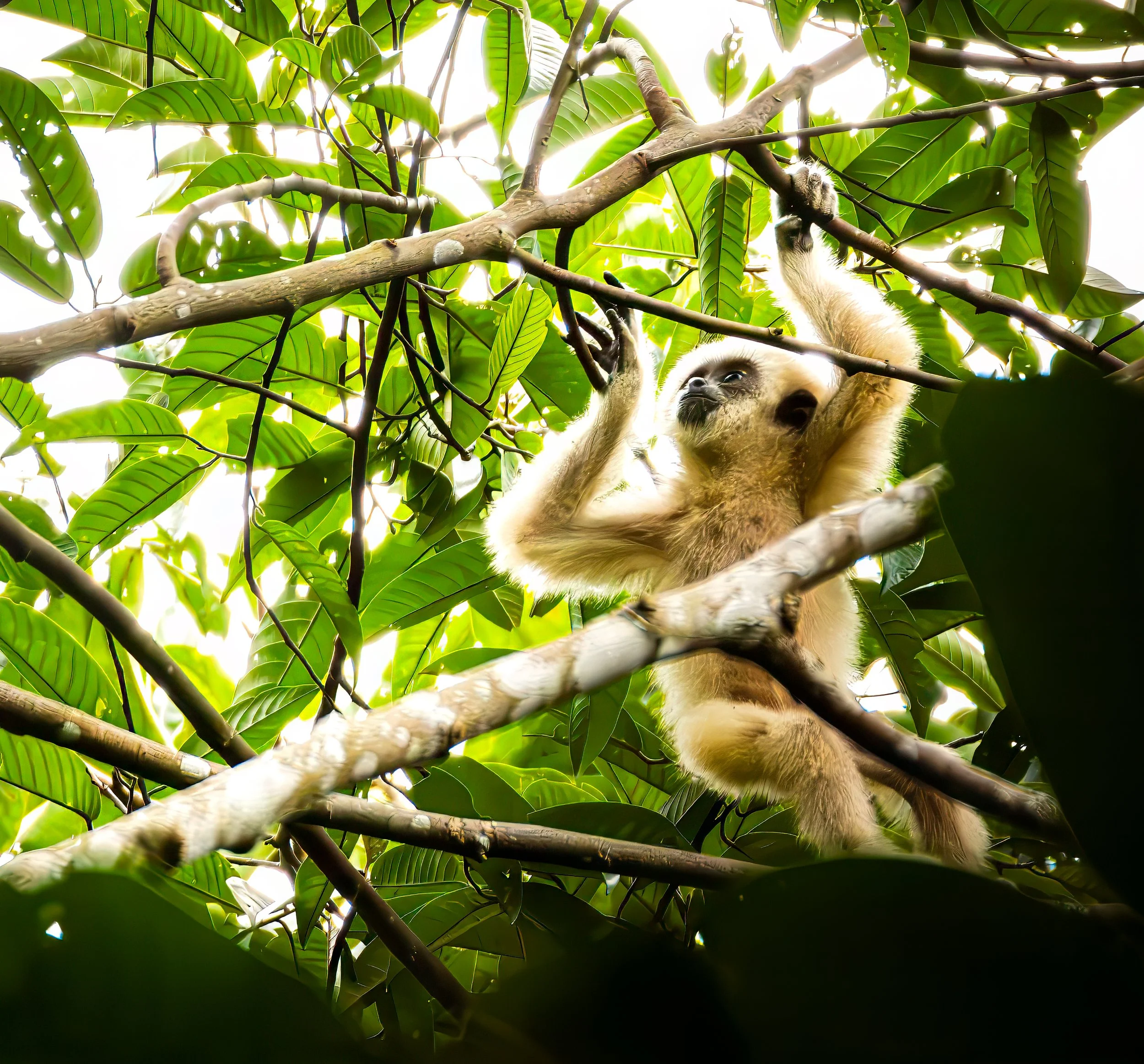
Infant White-handed gibbon, Hylobates lar
We could also hear hornbills calling in the distance — a particularly special sound given the pressure these birds face from hunting and the illegal wildlife trade.
We then headed to Batu Rongring to spend time with Jasson, Togar, and the Sumatran Ranger Project.
At their office we were shown just a small selection of the wire poaching traps the rangers had removed from the forest, along with camera-trap footage from their patrol areas. It was a pretty sobering reminder that protecting these forests isn't simply about stopping deforestation. The rangers are constantly dealing with poaching, wildlife conflict, and the challenges of protecting huge areas of forest border with limited resources.
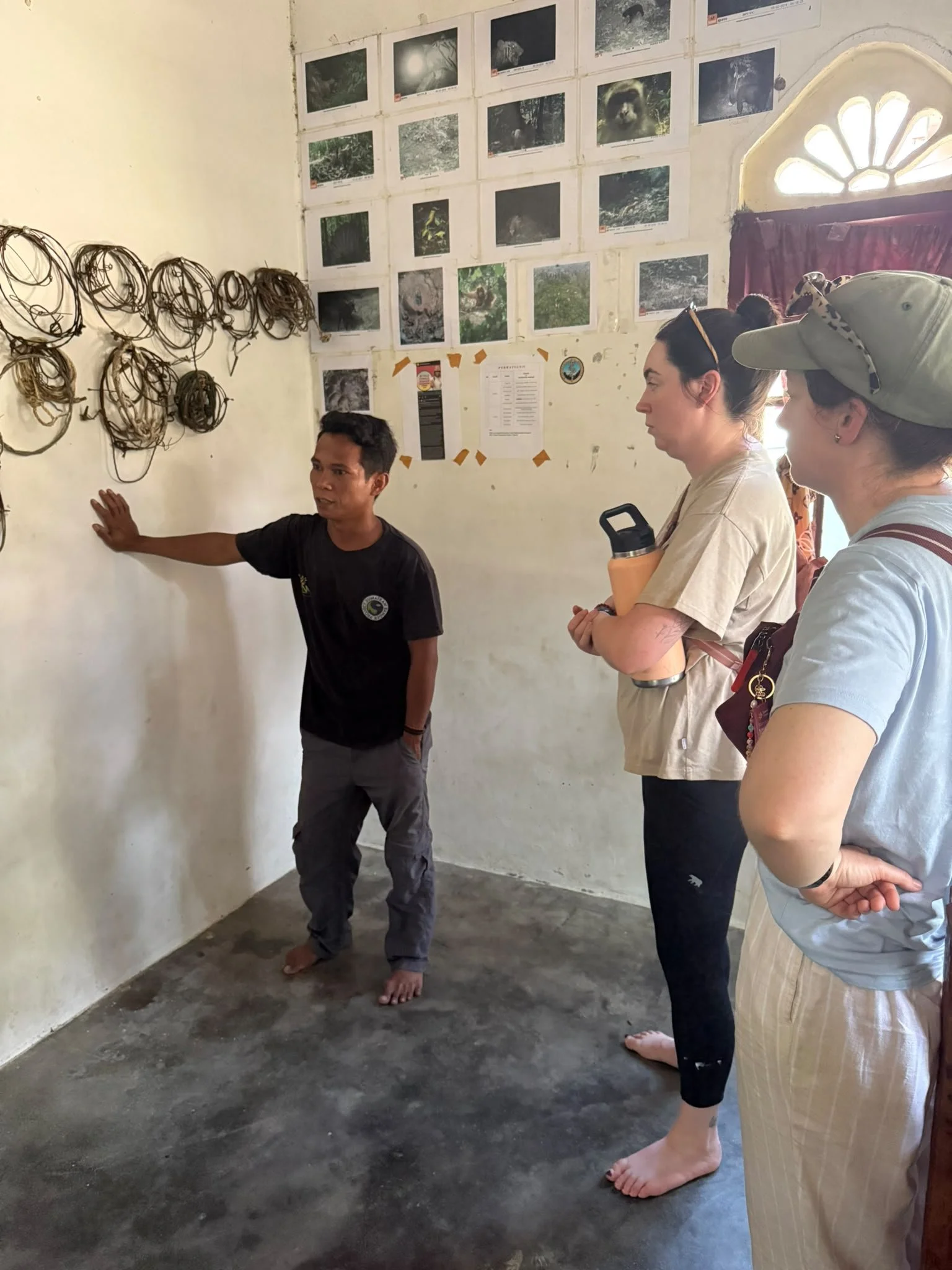
Ranger Togar, explaining how snares work to trap wildlife
We then headed out into the field, planting trees, visiting one of the last remaining giant primary trees, swimming in jungle rivers and climbing through river canyons. And discovering the millions of leeches that apparently come included with every Sumatran rainforest experience.
The night patrols were one of the highlights of the trip. The rangers worked as an incredibly efficient team, communicating almost entirely through whistles and torch flashes as they moved through the forest and plantations. The first night started quietly before I spotted a pair of eyes in the distance. A leopard cat.
All the lights went out and the rangers immediately sprang into action, trying to position themselves for a better view. Unfortunately, the cat disappeared before we could get any decent photos.
On the way back, I spotted another two pairs of eyes high in a tree. Two slow lorises. They weren't exactly in a hurry, so we managed to get some great photos.
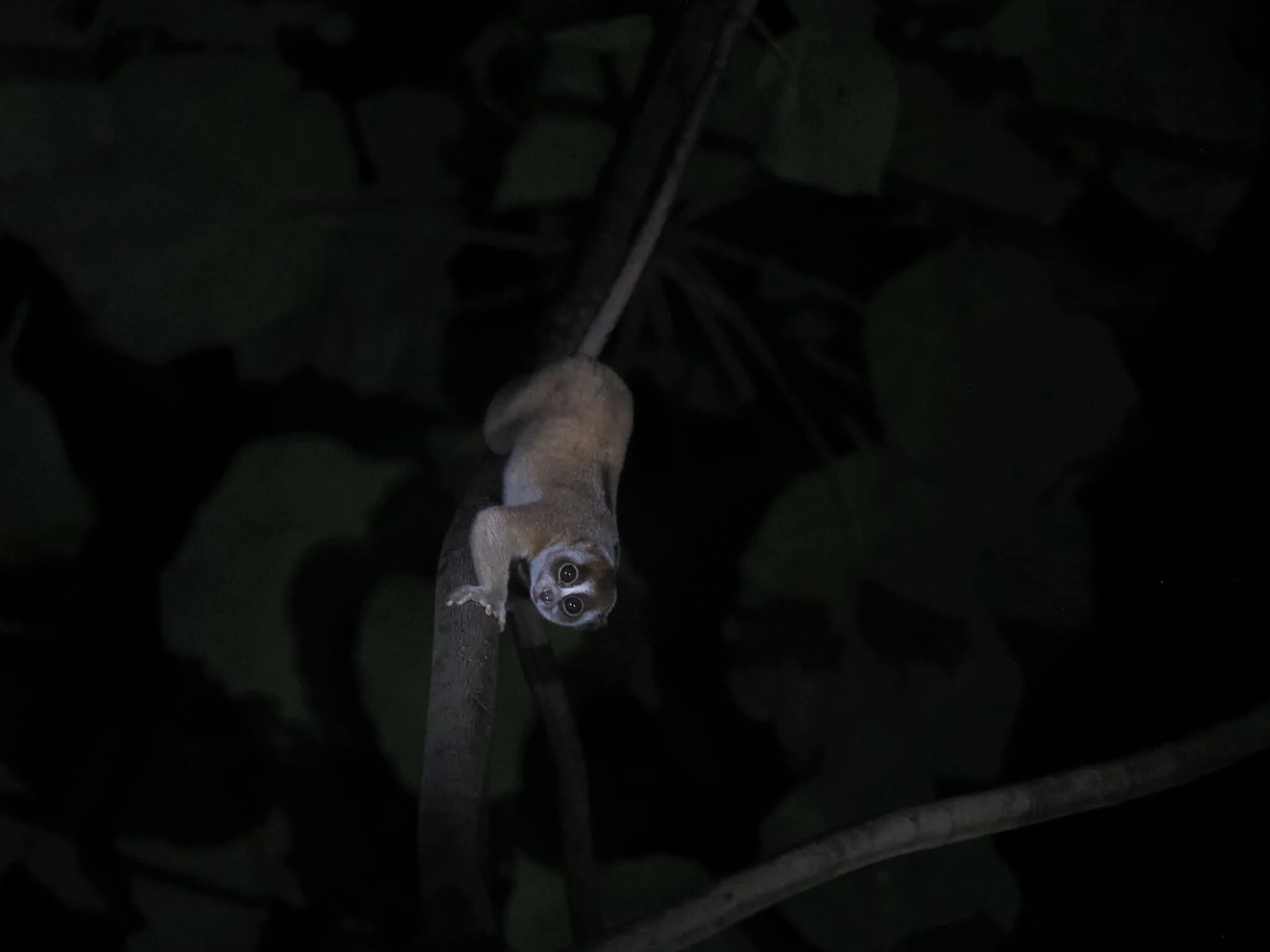
Sumatran slow loris, Nycticebus hilleri
The following day, another special encounter. Another slow loris spotted earlier in the day— except when we checked the photos, there was a tiny second pair of eyes hiding underneath her. A baby. Neither us nor the rangers had ever seen a young one before, making it an incredibly special encounter for all of us.
The next night, Jasson was determined to get us a decent photo of a leopard cat. After some fairly questionable 4WDing hanging on for dear life on the roof rack, Togar spotted the first one, but it disappeared almost immediately, leaving us with a spectacularly blurry photo.
A little later, I spotted another sitting out in an open field some distance away. This one stayed around long enough for everyone to get some great photos.
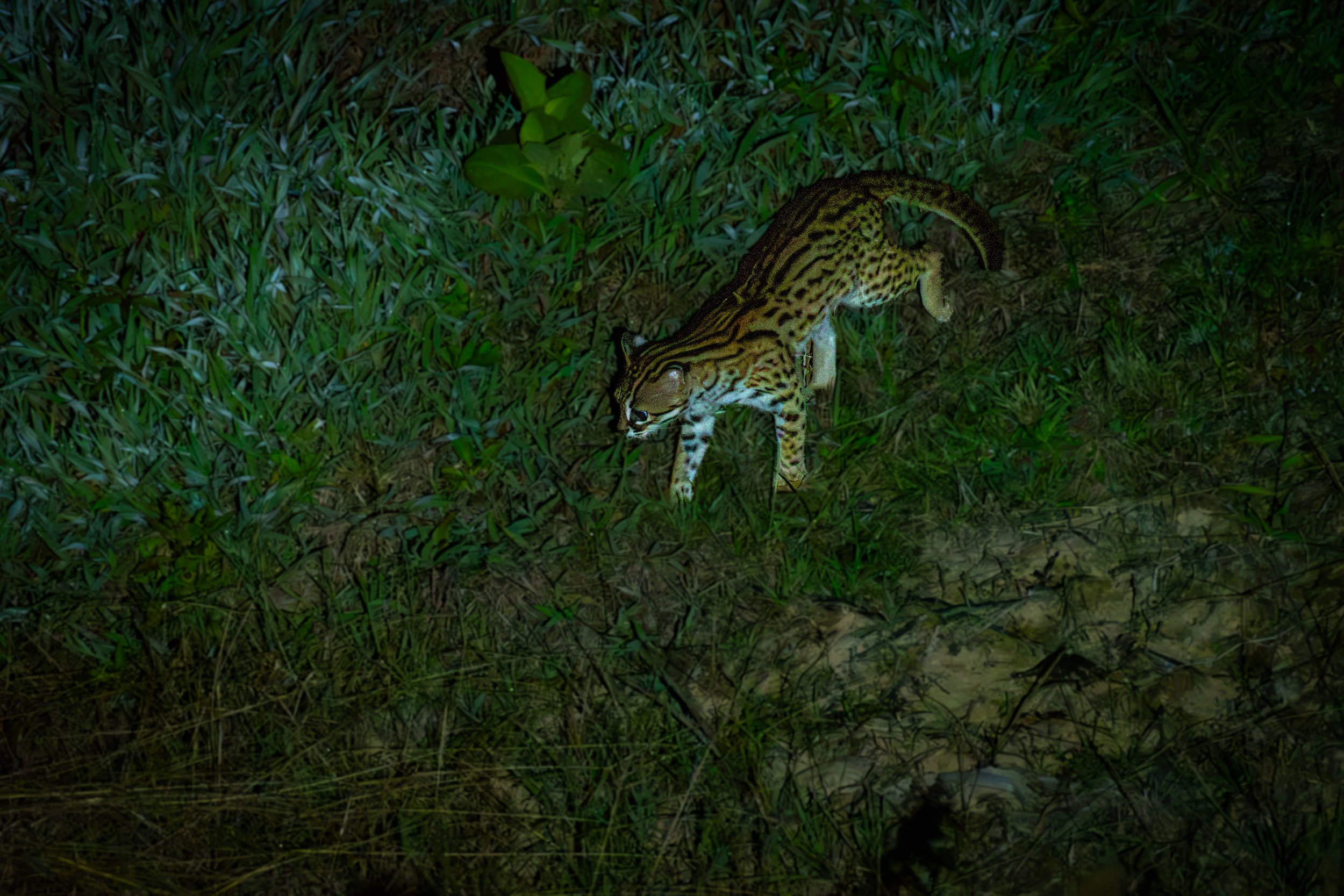
Sunda leopard cat, Prionailurus javanensis
This earned me an official nickname from the rangers: "Eagle Eyes." I'll be putting that on my CV.
We also had the opportunity to search for wild elephants. Eventually we found a large bull surprisingly close to the track.
We were told he'd nearly killed Jasson before. Naturally, this information was provided immediately before we were told to be prepared to run. Under the heavy foliage we only managed a few glimpses of him, but it was an incredible encounter.
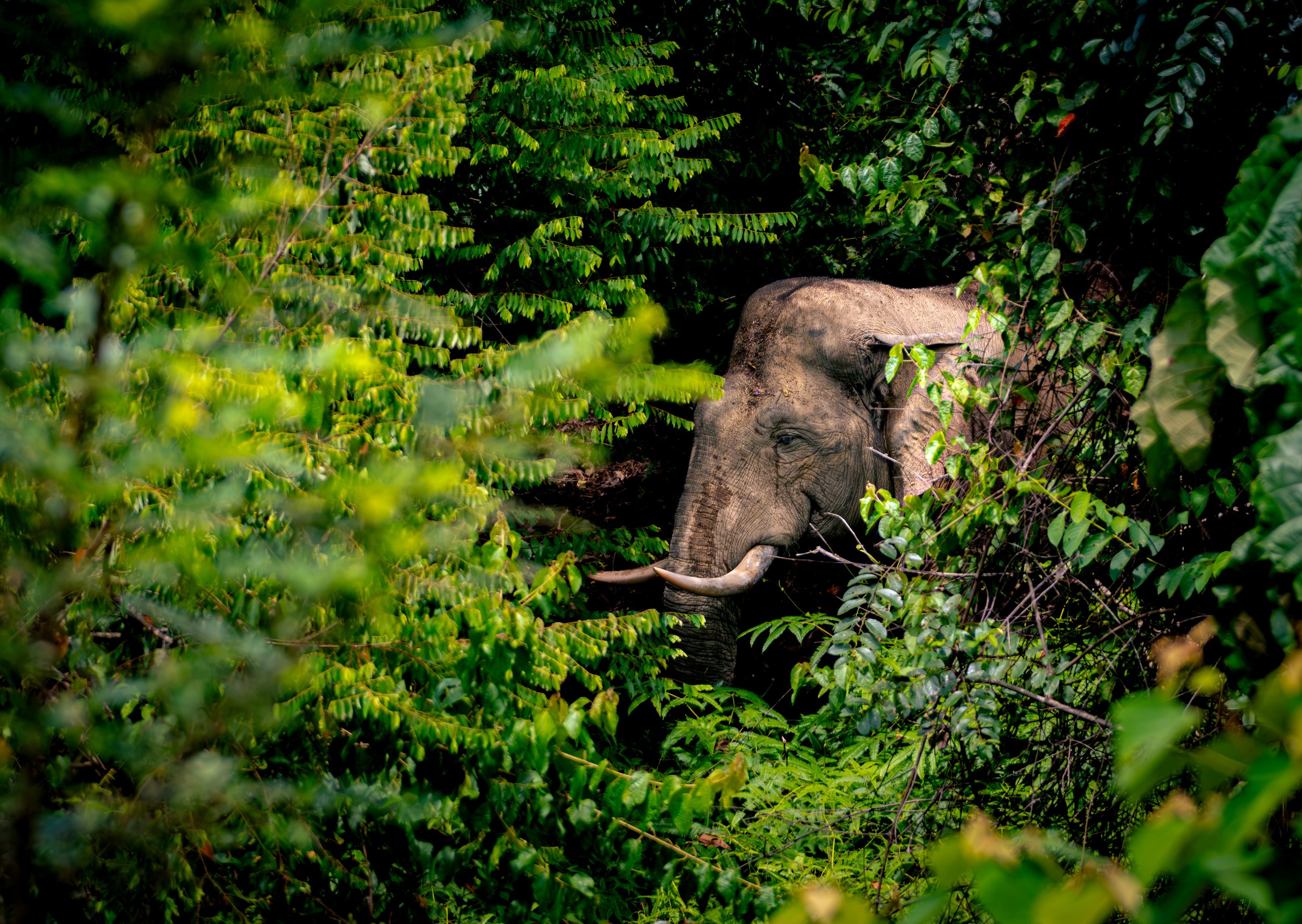
Sumatran elephant bull, ‘Benggang’
The rangers are working hard to reduce local wildlife conflict. One of the projects they showed us was a cattle corral they had built to protect local livestock from tiger attacks. Rather than simply treating predators as a problem to be removed, the project helps protect people's livelihoods while giving tigers a better chance of remaining in the landscape.
We also visited a recently constructed elephant monitoring tower funded through donations and checked camera traps, where nearby we found fresh tiger tracks in the mud from that morning.
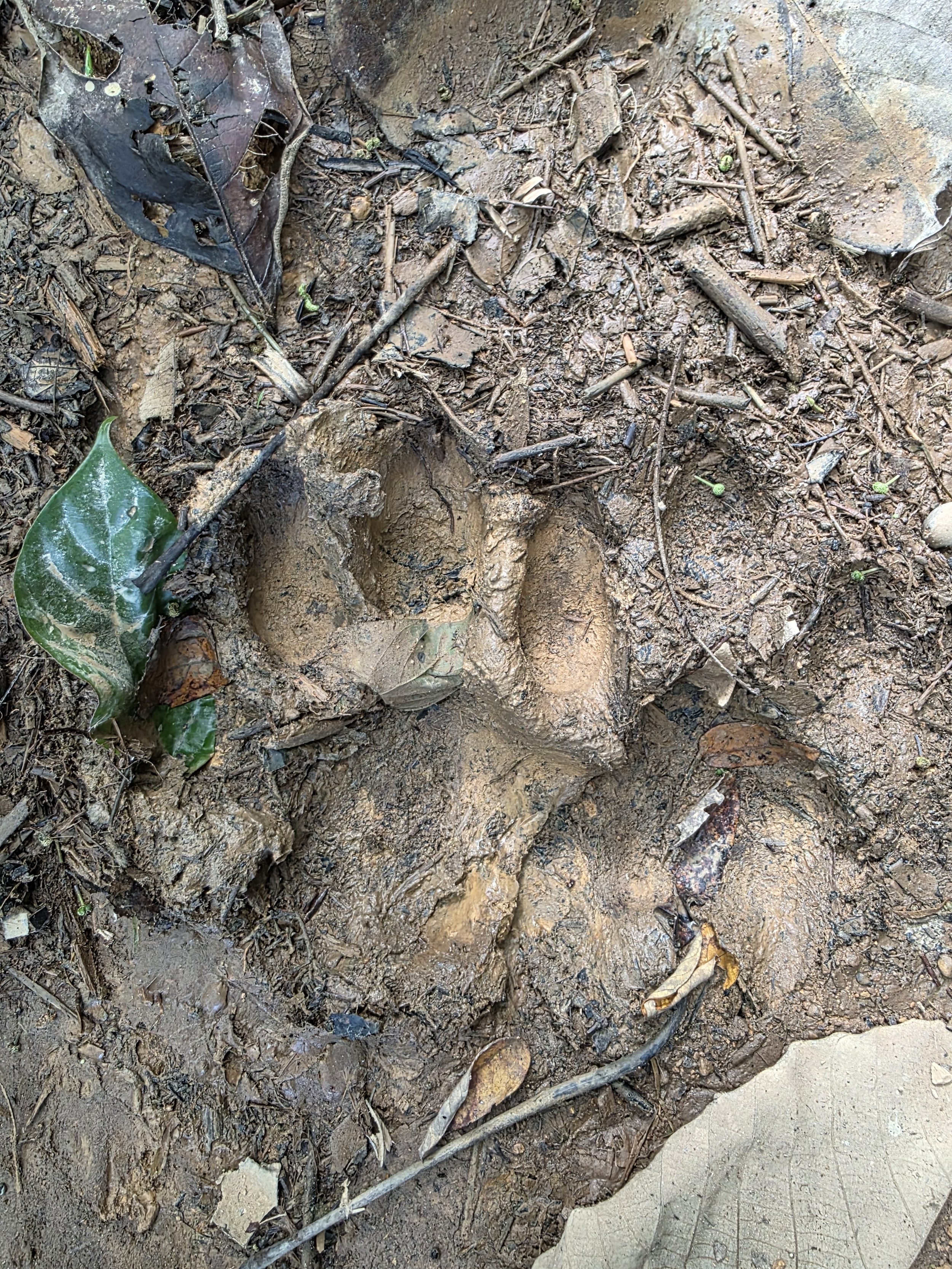
Fresh Sumatran tiger pugmarks
What really stood out about spending time with the rangers was their connection to the forest. Their knowledge went far beyond identifying species. They could read approaching weather from insect calls, understand how wind travelled through the river valleys and pick up tiny signs that most of us would completely miss.
We only scratched the surface of their knowledge, but I was incredibly honoured when they invited me to return and join them on one of their patrols in the future.
After the field trip finished, I headed back to Bukit Lawang to do some dedicated herping. It hadn't rained for weeks, making conditions far from ideal. Still, we managed a Wagler's viper, rainbow water snake, mangrove cat snake, water monitors, turtles, agamids and gliding geckos.
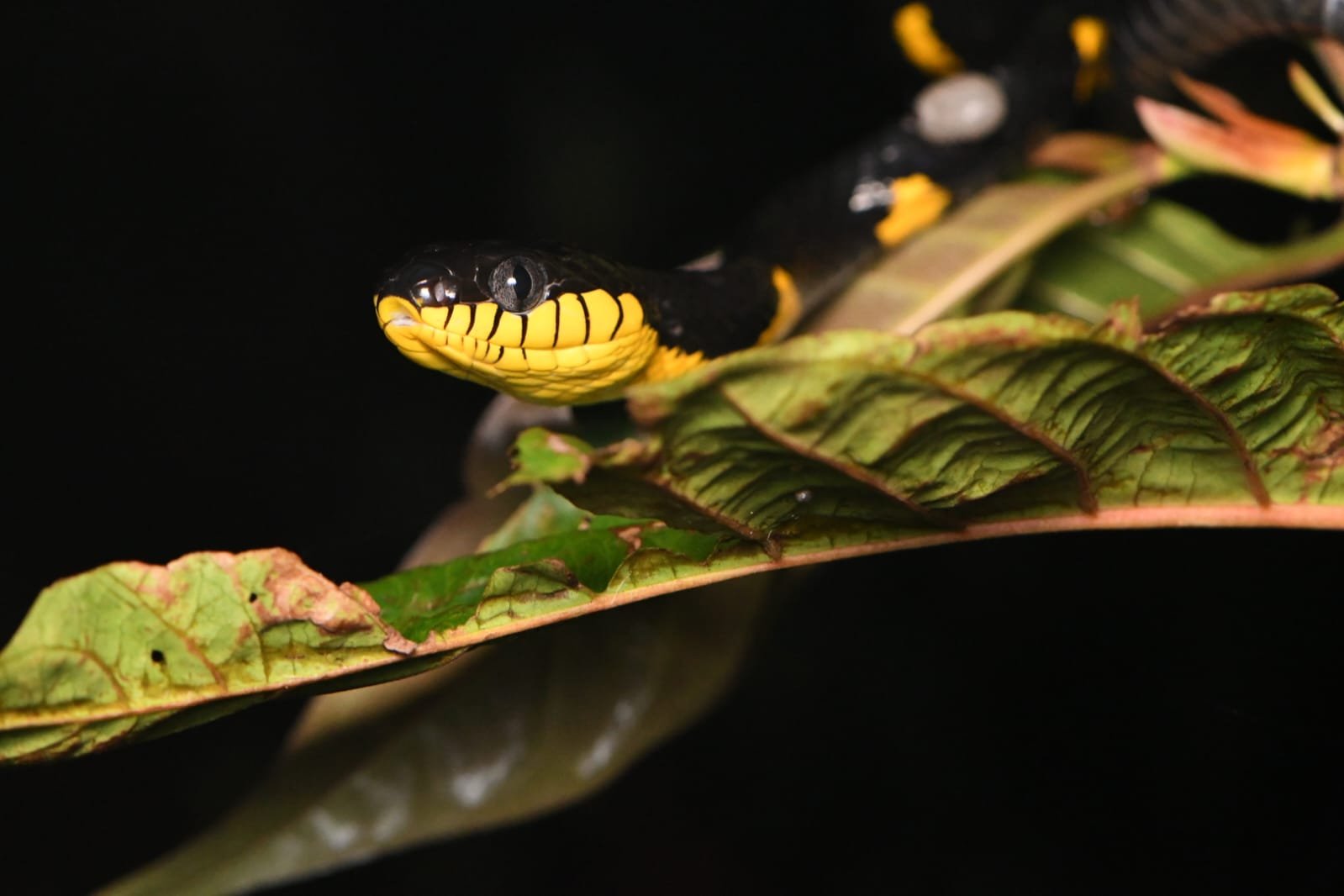
Western mangrove cat snake, Boiga melanota
On the second night, after some increasingly creative attempts at communicating through broken English, I managed to convince the guides to let me point us towards some more promising habitat. Finding the mangrove cat snake was particularly cool. Judging by their expressions, I think it may have been the first time they'd seen one themselves — a pretty special moment to be able to share.
The third day was supposedly reserved for king cobras, although the habitat we were taken to looked considerably more promising for reticulated pythons. No king cobra or python unfortunately, but the day still delivered what may have been one of the most memorable encounters of the trip.
While trekking through the jungle, we turned a blind corner and came face-to-face with a sun bear. I don't know who crapped themselves more — us or the bear. It bolted almost immediately, but seeing an animal so rarely observed outside camera traps was an incredible experience.
All in all, this was a pretty life-changing trip.
What I'll remember most isn't just the incredible wildlife, but the people working tirelessly to protect it. From the team at Orangutan Haven to the rangers of Batu Rongring, I was lucky enough to spend time with people dedicating their lives to protecting wildlife, restoring damaged habitat and finding ways for local communities and wildlife to coexist.
Sumatra is a pretty brutal reminder of what we stand to lose. But it's also a reminder that conservation isn't just about protecting animals — it's about protecting habitat, supporting the people who live alongside wildlife and giving communities reasons to value the species sharing their landscape.
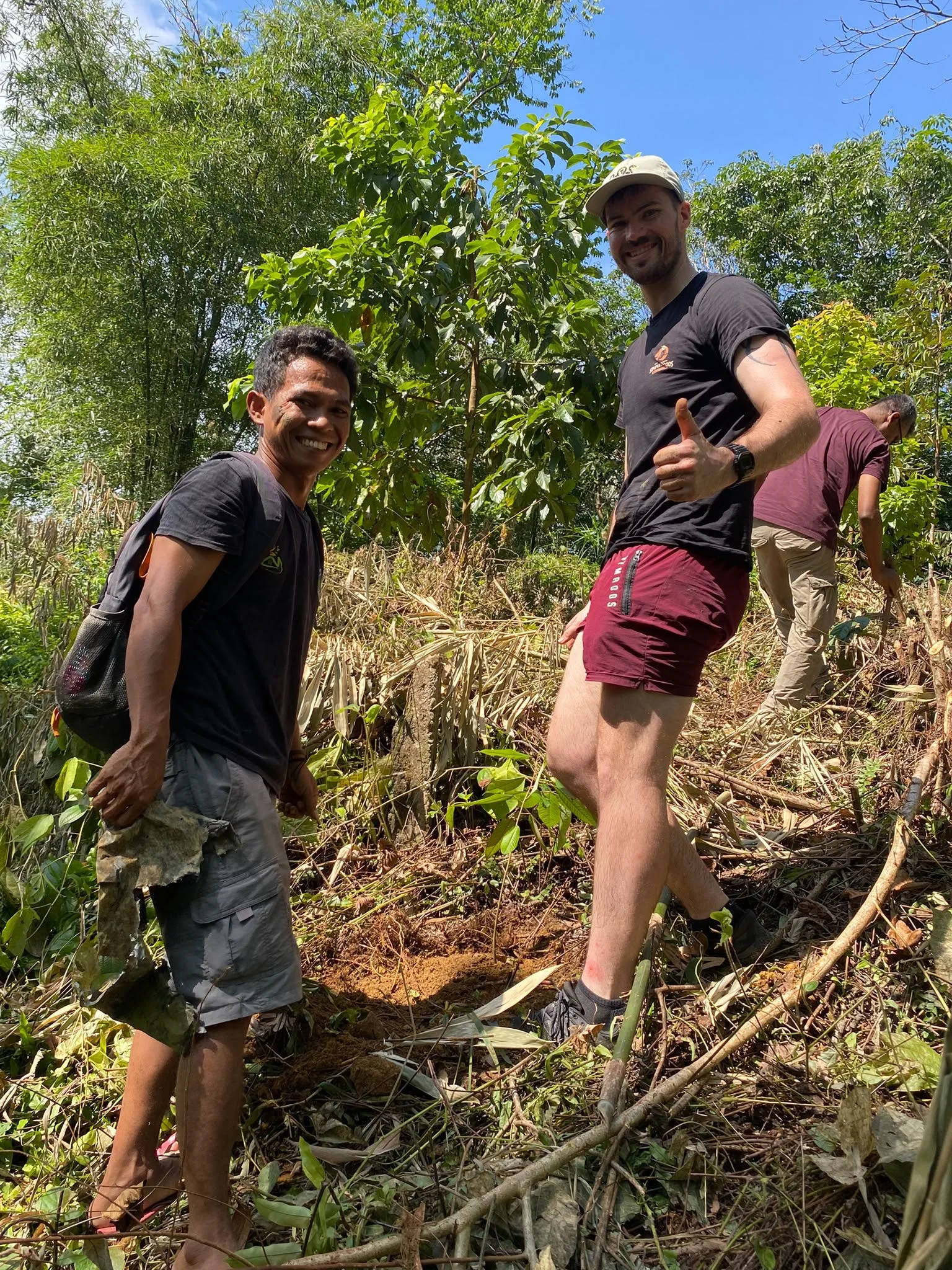
Ranger Togar and me (Jayden)
The work being done by these teams may sometimes feel like a tiny effort against enormous pressures, but seeing it firsthand made it very clear that it matters.
Huge thanks to Amy from Raw Conservation Adventures for organising the field trip, everyone who came along and made it such a fun experience, and especially Jasson, Togar, and the Sumatran Ranger Project for sharing their knowledge, their forest, and their homes with us.
